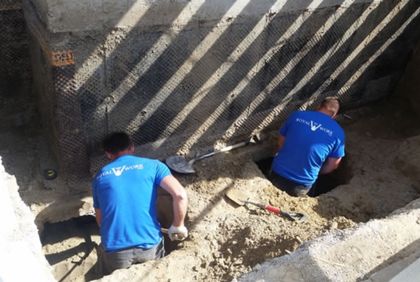
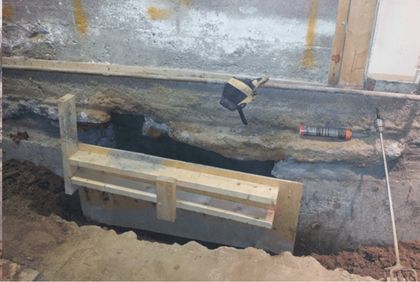
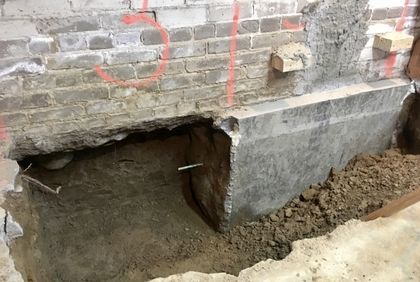
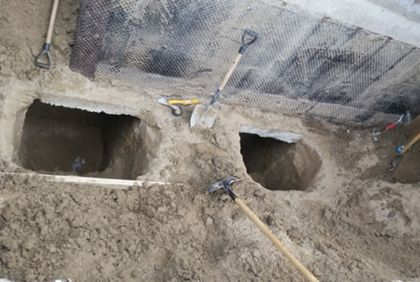
Underpinning is a very common procedure in most renovations of older homes with low basement ceilings. The idea behind it is to strengthen the existing foundation, while also increasing the height of the basement ceiling by excavating below the foundation walls and extending the footings lower into the ground. Underpinning is sometimes also done when unexplained cracks around the walls, windows, and doors are seen which are signs of foundation settlement. When the foundation continues to settle, more and more cracks will appear until the structural integrity of the house becomes compromised.
What is underpinning?
Underpinning is a process used to increase the depth of an existing foundation by lowering the footing so that it can rest on more supportive soil. But the way we put it: underpinning is simply the process of strengthening the foundation of a house or building and raise the ceiling height of a basement. Property owners need to make themselves familiar with this concept because the longer their houses stands, the more vulnerable it is to soil upheaval and settlement. When the worse of the problem manifests, cracks and leaks around the house and foundation will be apparent—hence the need for underpinning.
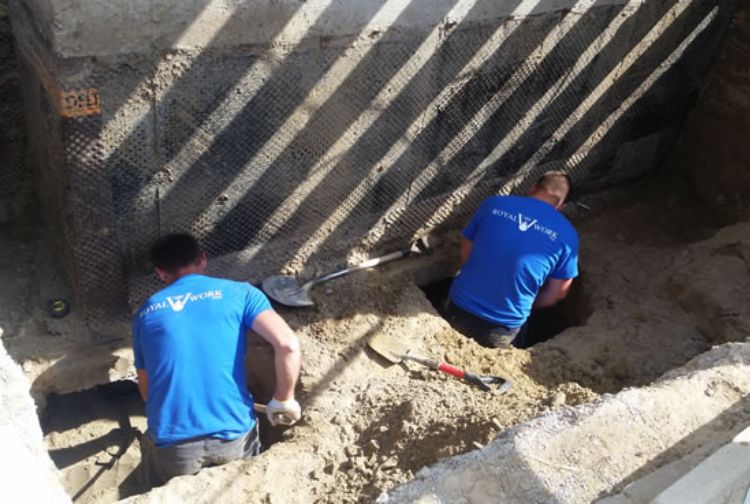
Benefits of underpinning
Needless to say, every crucial part of the house, specially the foundation, must be built according to Ontario Building Code standards. Which is why only professional residential foundation contractors are qualified for the job. We have the resources and experience to undergo residential concrete forming needed for foundation walls of any height. If not done correctly, it can lead to soil settlement problems and water seepage. These potential problems can inconvenience your family in the future and cost you a lot of money down the road to fix and you don’t really want that. Talk to us and we will give you the best competitive rate on the market.